Publications
Books
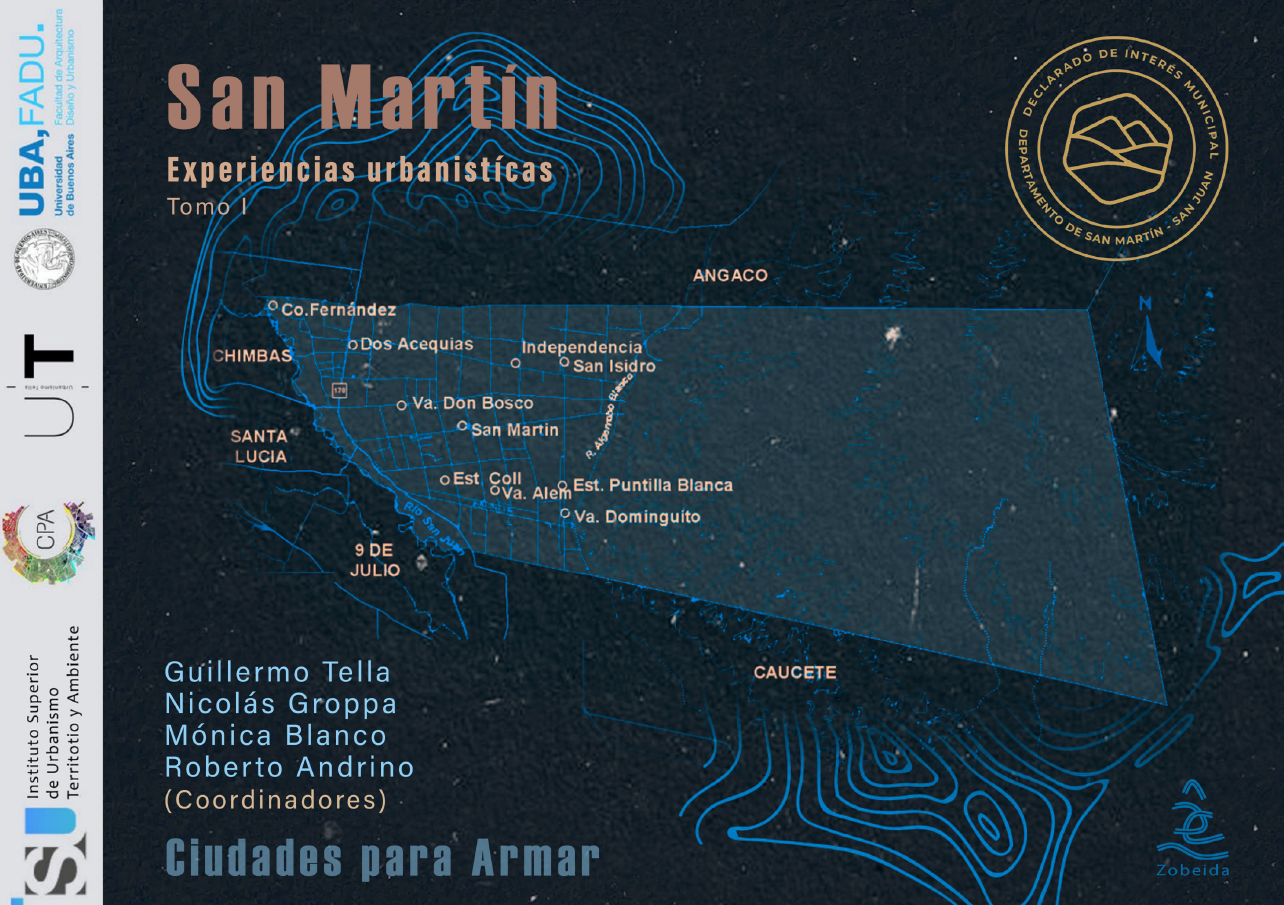
San Martín: Urban experiences I
This document is intended for the academic community, for those who manage the territory, for the residents of the department, and for the broader population of San Juan, with the aim of serving as a tool for territorial analysis and projection, contributing to improving the quality of life of all residents of San Martín and their surroundings.
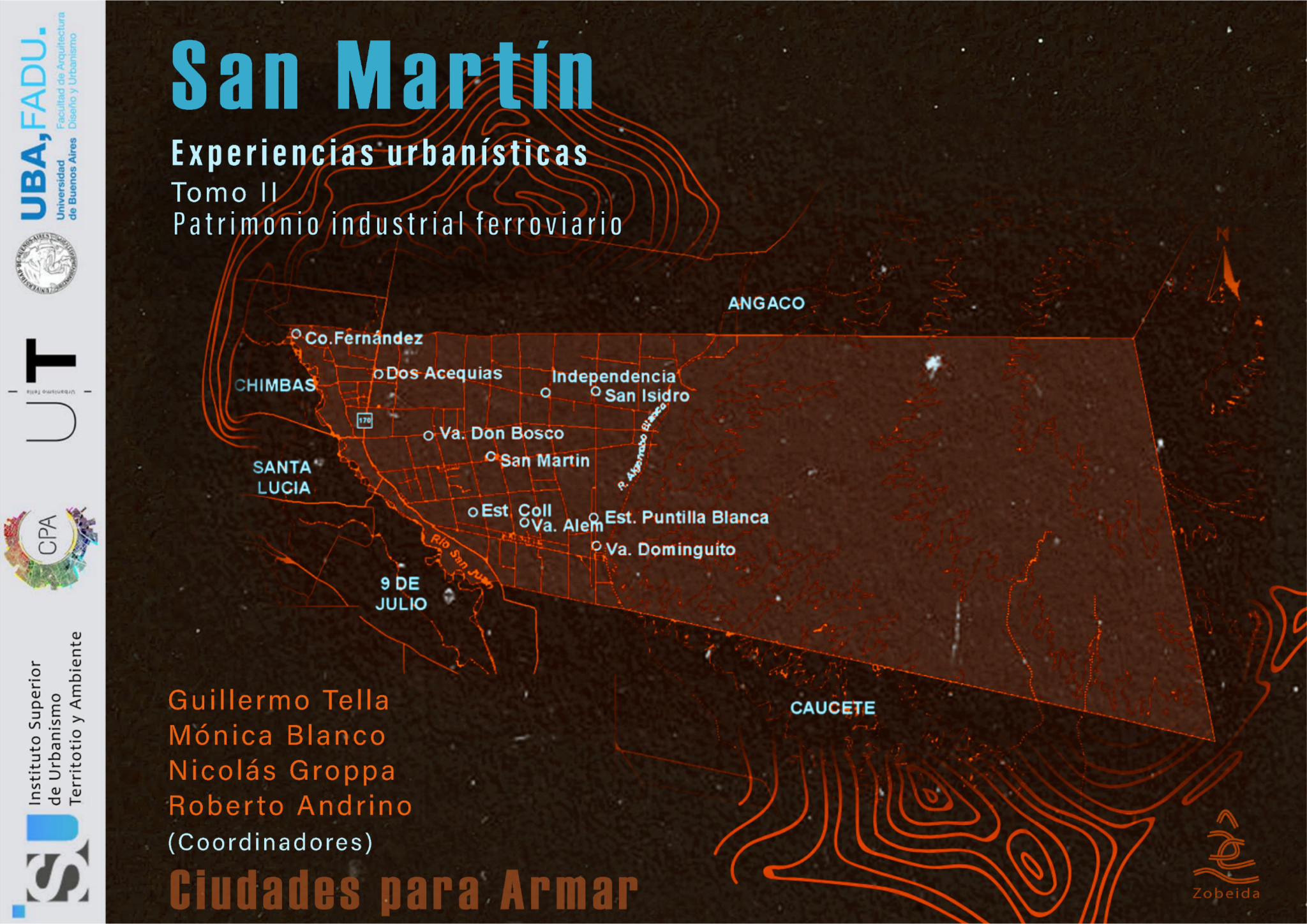
San Martín: Urban experiences II. Railway industrial heritage
This document presents the experience carried out in San Martín by students from Ciudades para Armar at the Faculty of Architecture, Design and Urbanism of the University of Buenos Aires. The work focused on the exploration of the territory, the development of a diagnosis, and the formulation of a series of urban improvement proposals, with a particular emphasis on the enhancement and reactivation of railway industrial heritage.
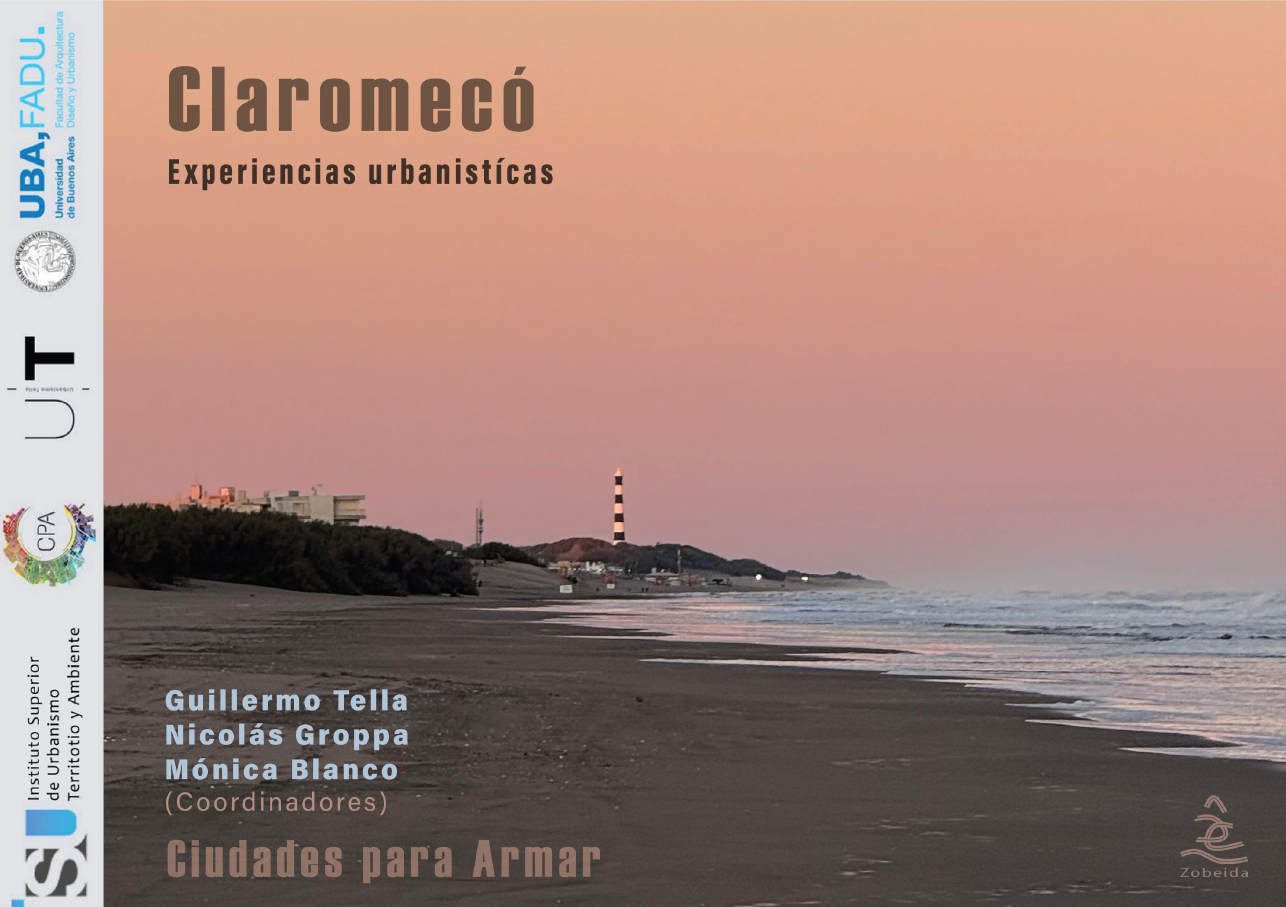
Claromecó: Urban experiences
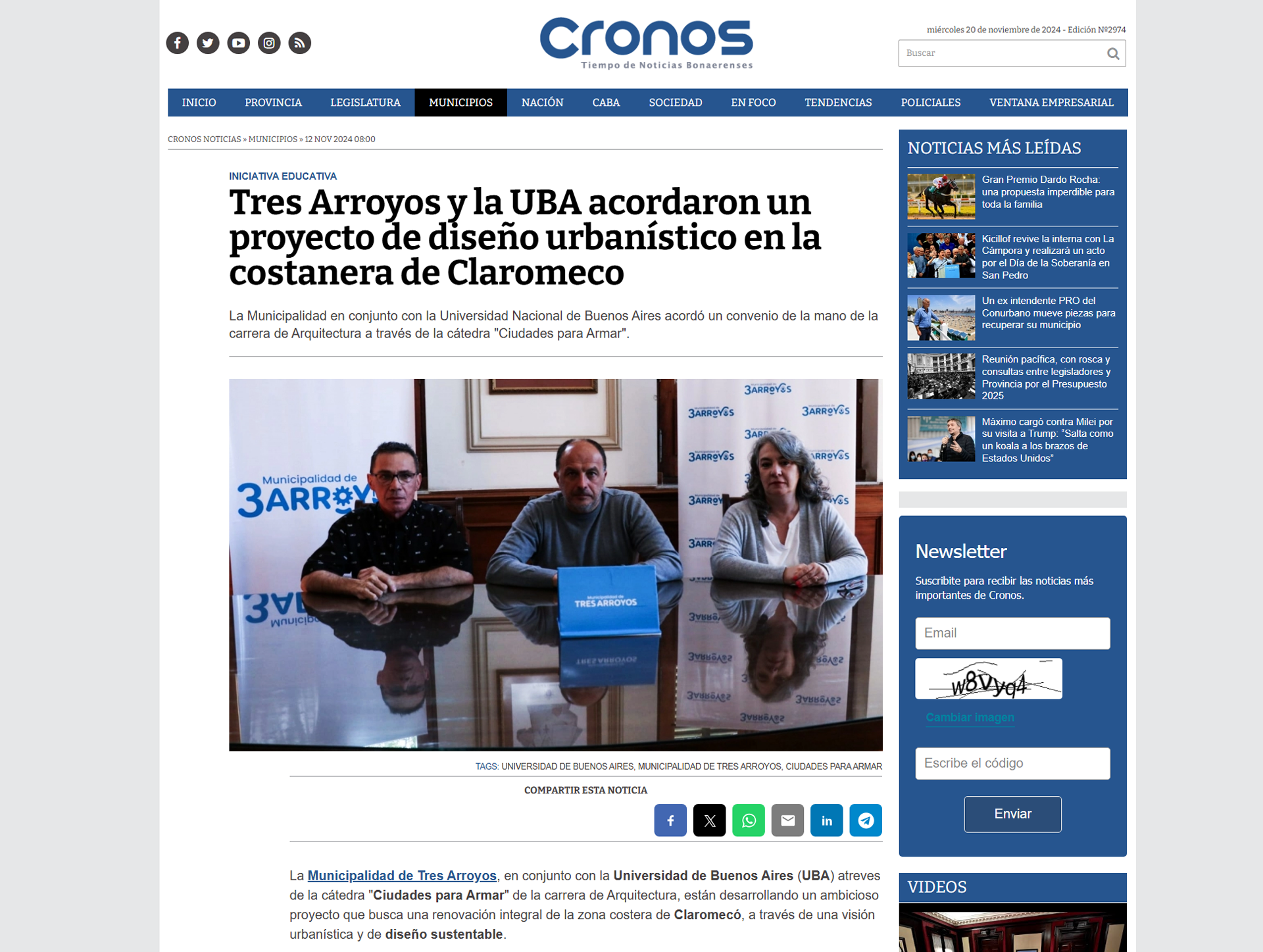
This document presents the experience of Claromecó, carried out by students from Ciudades para Armar at the Faculty of Architecture, Design and Urbanism of the University of Buenos Aires, who conducted an exploration of the territory, developed a diagnosis, and formulated a series of urban improvement proposals to be implemented in the city of Claromecó.
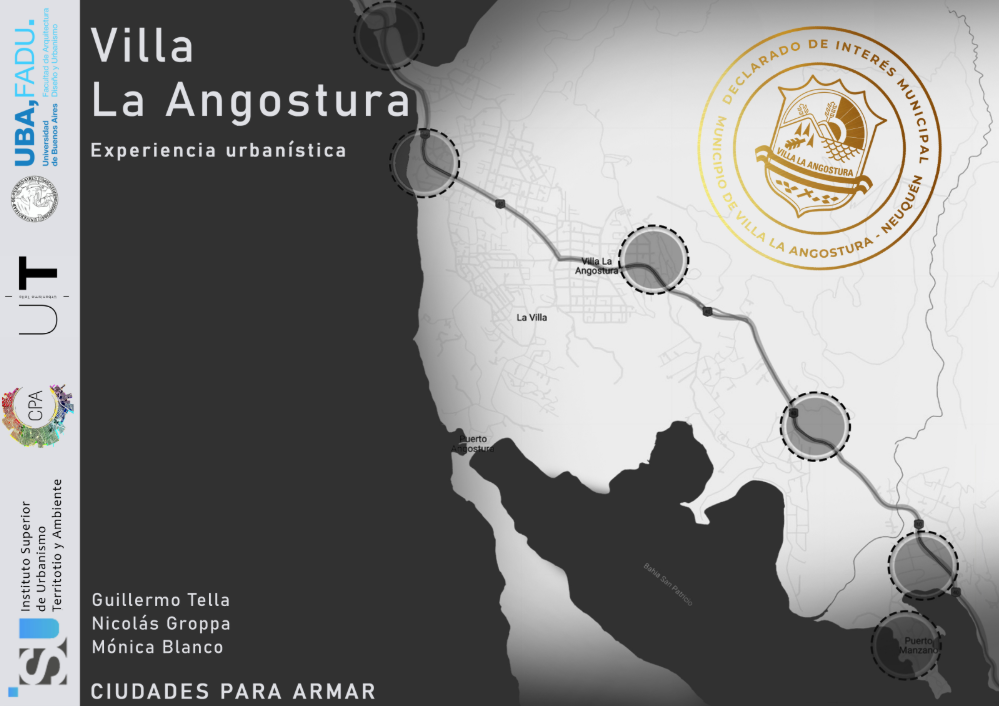
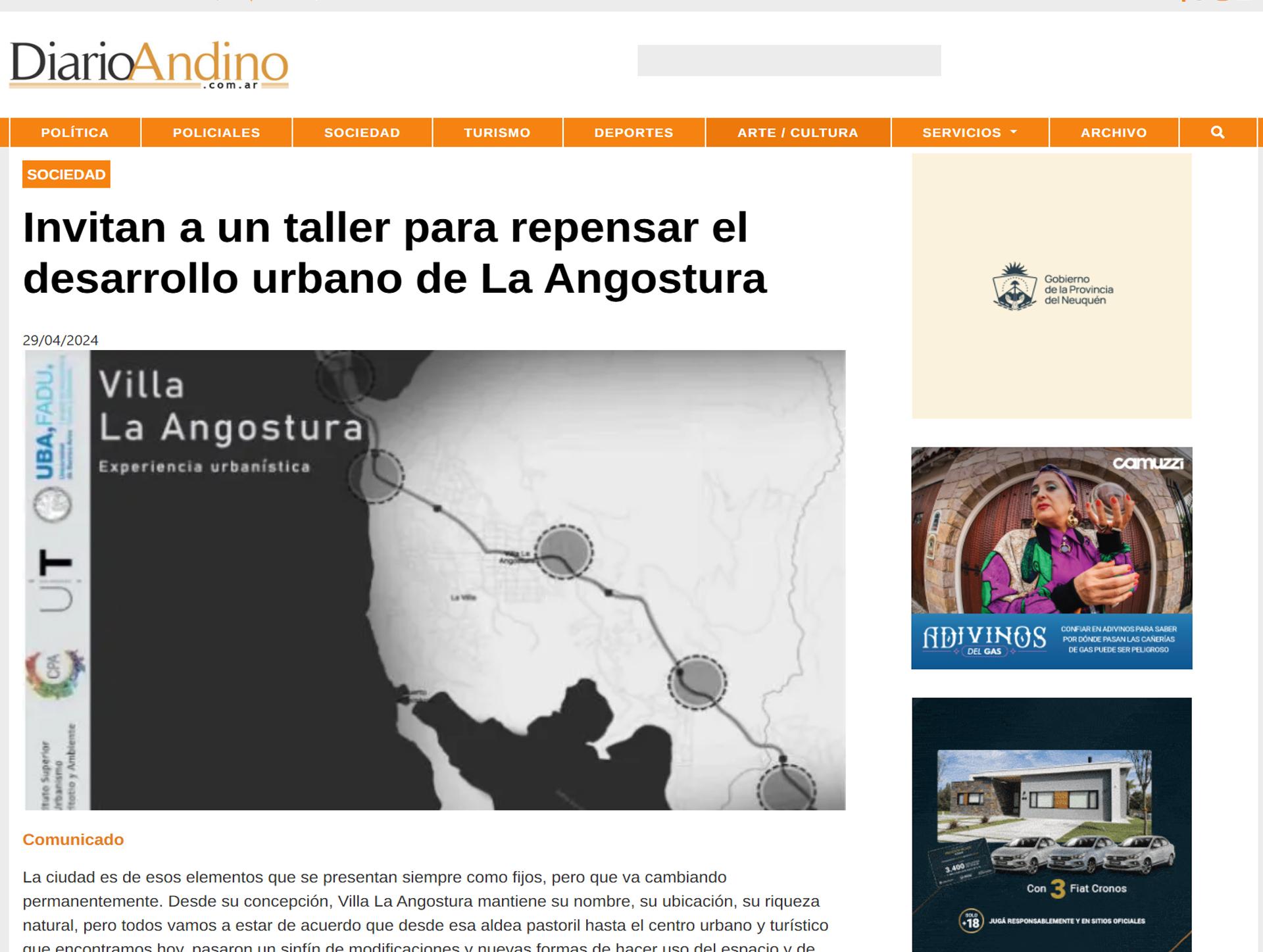
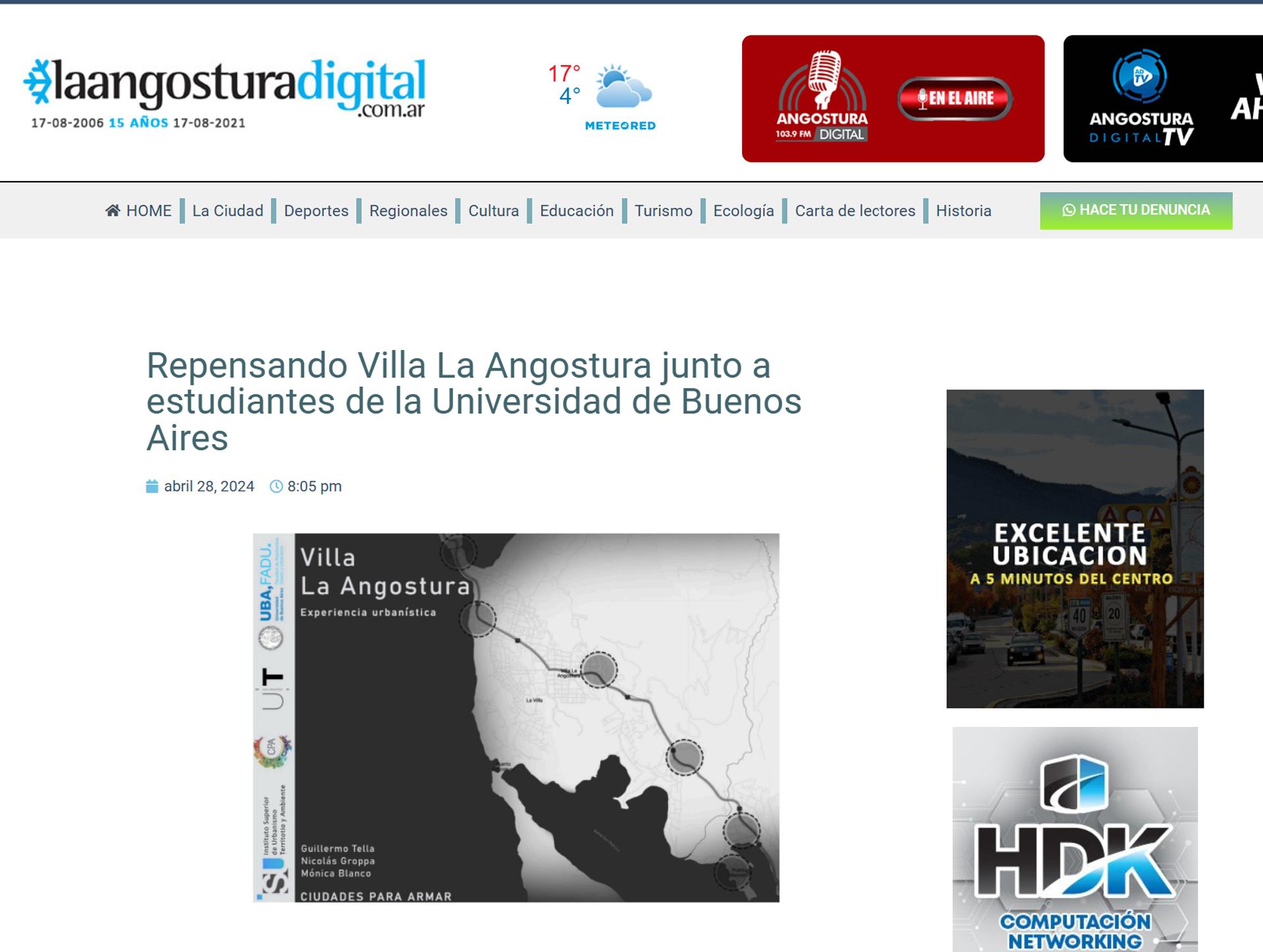
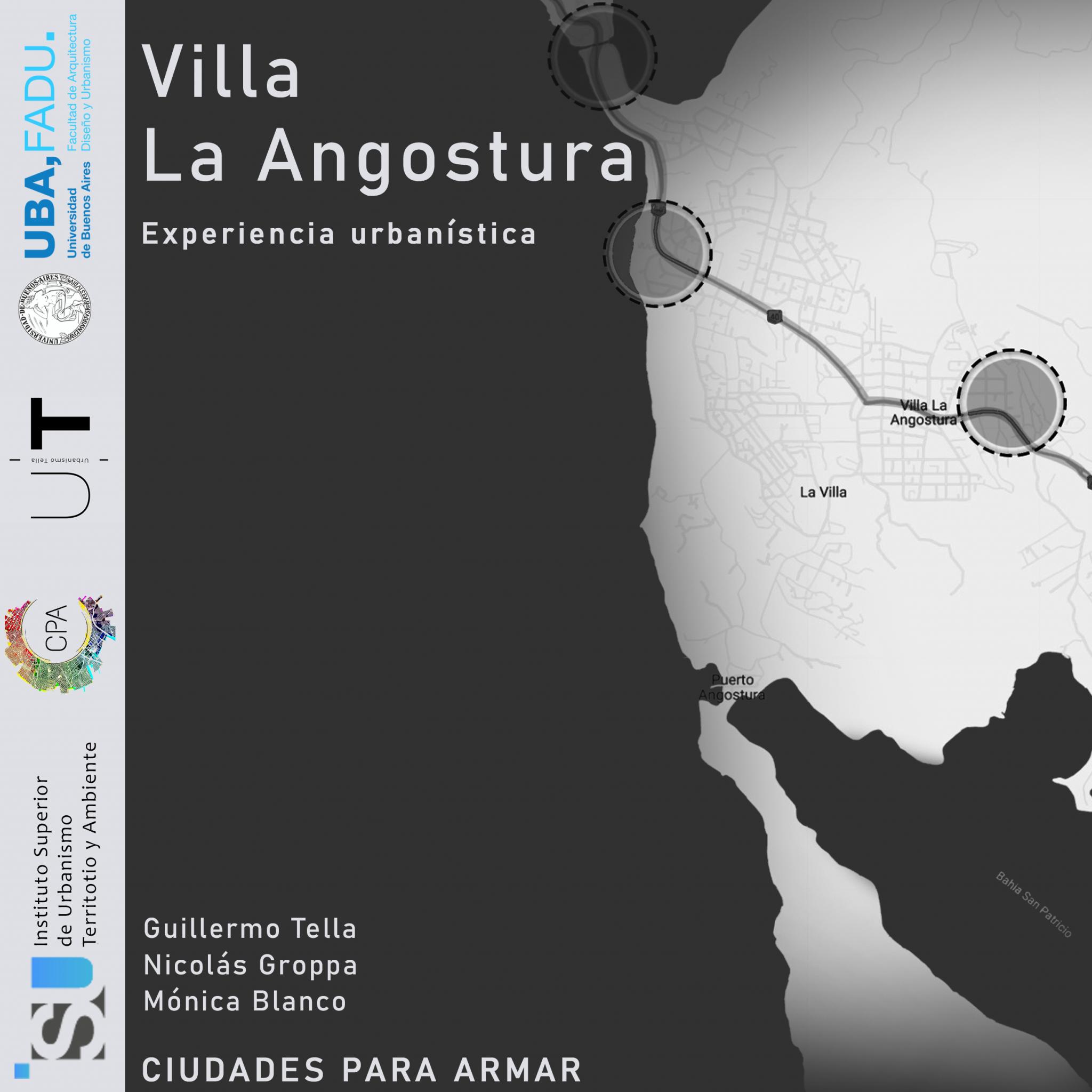
Villa la Angostura: Urban experiences
This book invites us to reflect on the way we conceive and create cities, considering not only the theoretical/academic city but also the city shaped by urban planners, social actors, governments, and public and private entities. It prompts us to ask: Is the city an element designed behind a desk, or is it a participatory discipline?
The current document presents the results obtained from the 2023 Ciudades para Armar course at the University of Buenos Aires, carried out with the support of the Municipality of Villa La Angostura. It showcases the analysis, diagnosis, and proposals for territorial improvement.
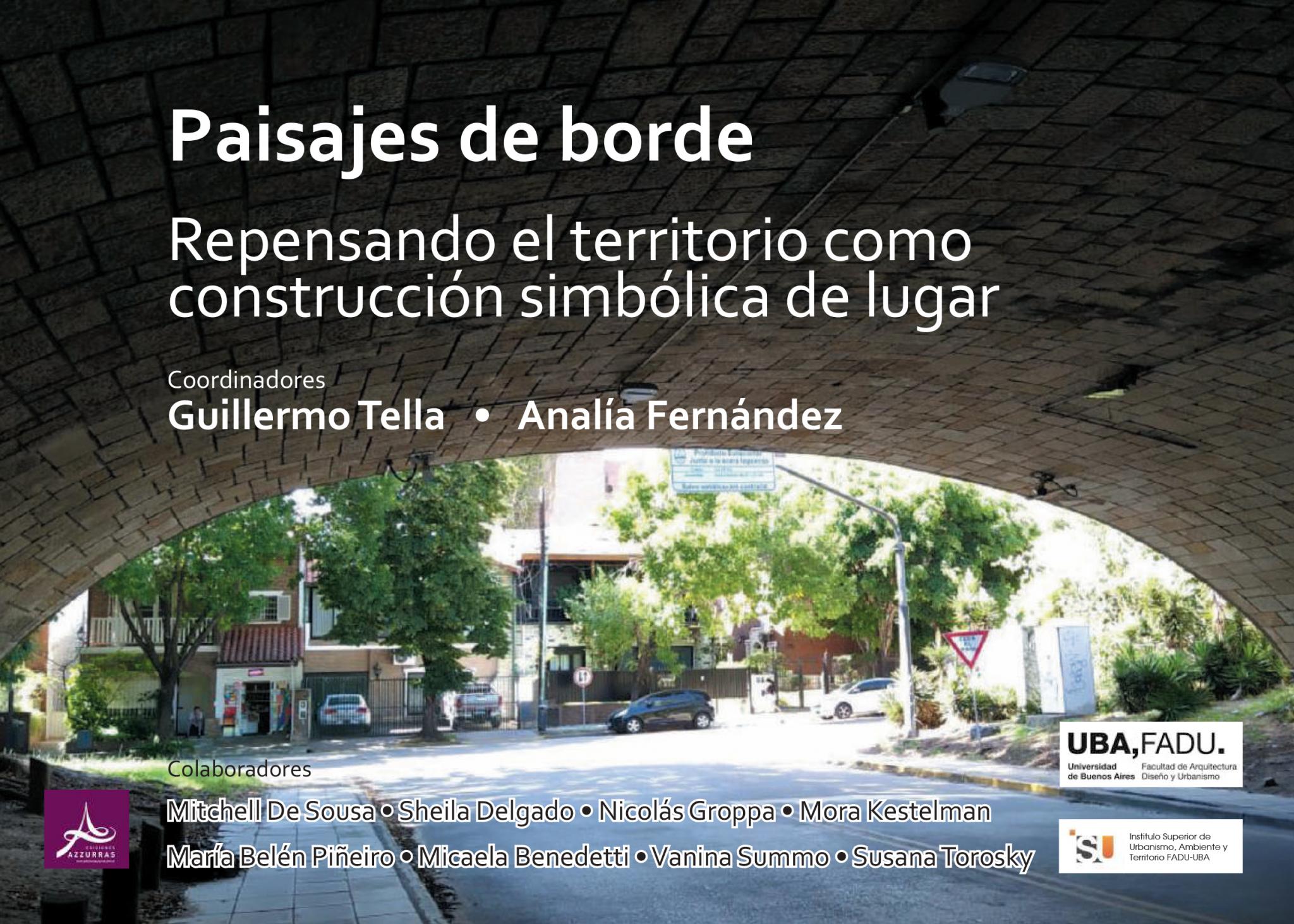
Border Landscape: Re-thinking the territory as a symbolic construction of the place
This book presents partial results from the research project Urban Landscape in Border Areas of the University of Buenos Aires. It invites readers to reflect on the urban landscape as a tool to understand the constitutive processes of the territory, where all components of the urban fabric acquire meaning through the relationships between social actors and their daily lives. It discusses the symbolic order of the territory, emphasizing the importance of dominant rules and regulated activities within a specific situation, place, and context.
Articles and Pappers
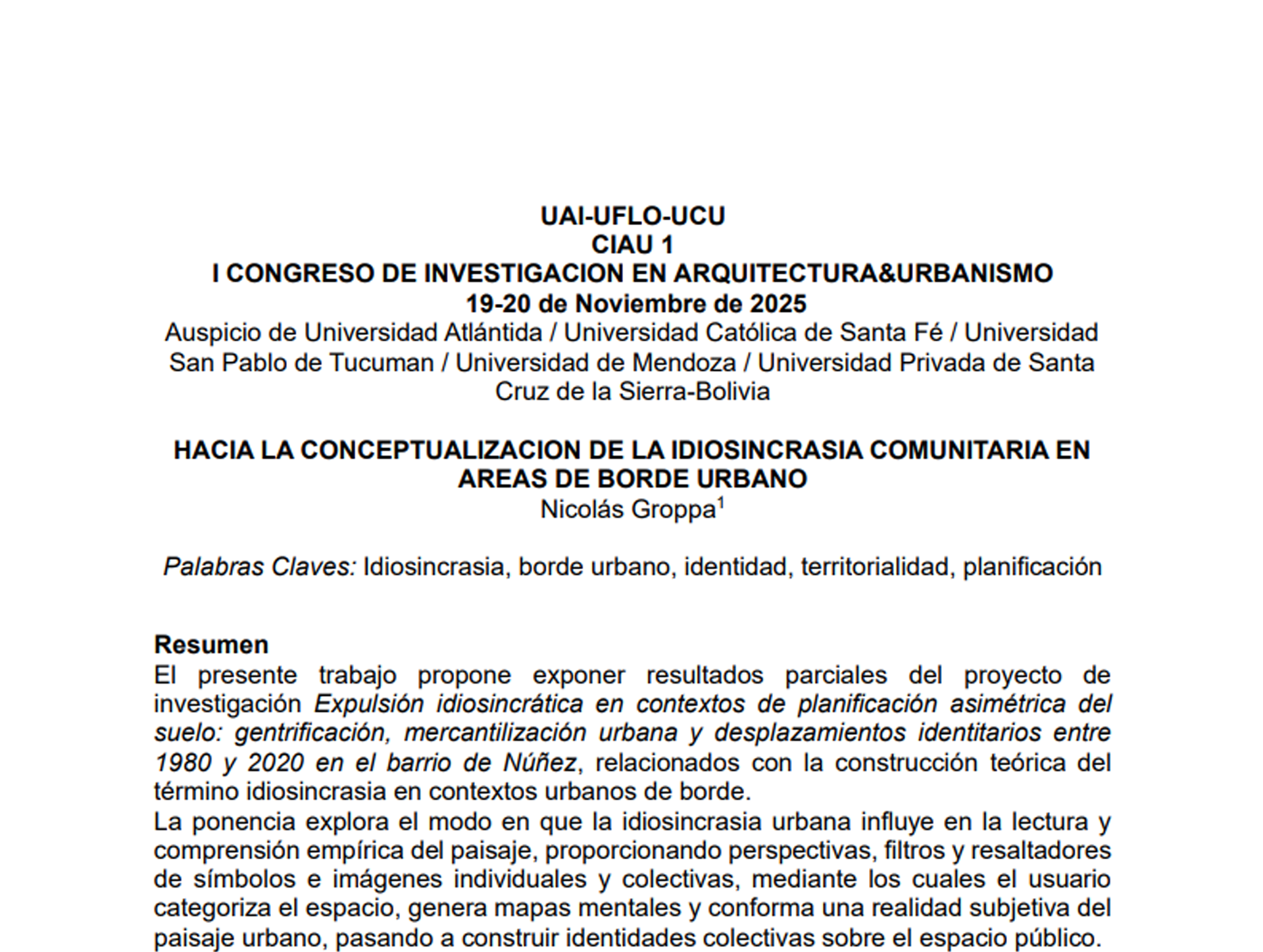
Towards the conceptualization of community idiosyncrasy in urban fringe areas
The paper explores the way in which urban idiosyncrasy influences the reading and empirical understanding of the landscape, providing perspectives, filters, and enhancers of individual and collective symbols and images through which users categorize space, generate mental maps, and construct a subjective reality of the urban landscape, ultimately shaping collective identities around public space.
To this end, a theoretical exploration will be conducted drawing on seminal authors in the field of community idiosyncrasy from psychology, sociology, anthropology, and urbanism, whose contributions form part of the academic consensus, as well as contemporary texts that shape the current debate on the subject.
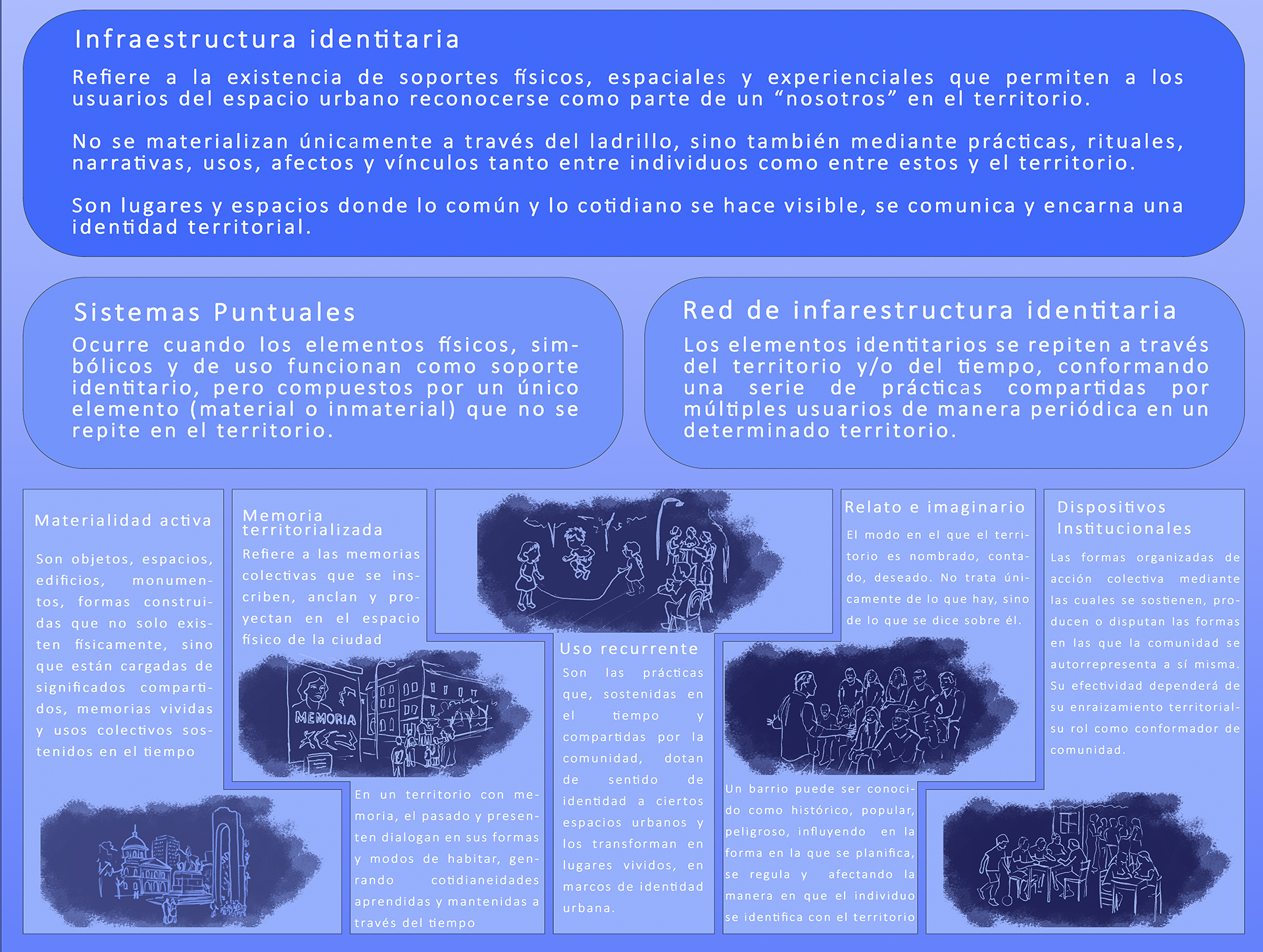
Tracing Identity Infrastructure: Material and Symbolic Supports that Communicate Identity as an Instrument of Socio-Spatial Appropriation
In this article, the reading of the landscape is approached as a tool to decipher and understand the constitutive processes of identity infrastructure in urban space. The elements that construct it materially, symbolically, and functionally are understood in relation to the actors who use and appropriate these portions of the city through communicational feedback involving idiosyncrasies, symbols, and subjective meanings. These processes define who is invited to use public space, to appropriate it, and to become part of the collective identity, and who remains excluded through material or immaterial barriers.
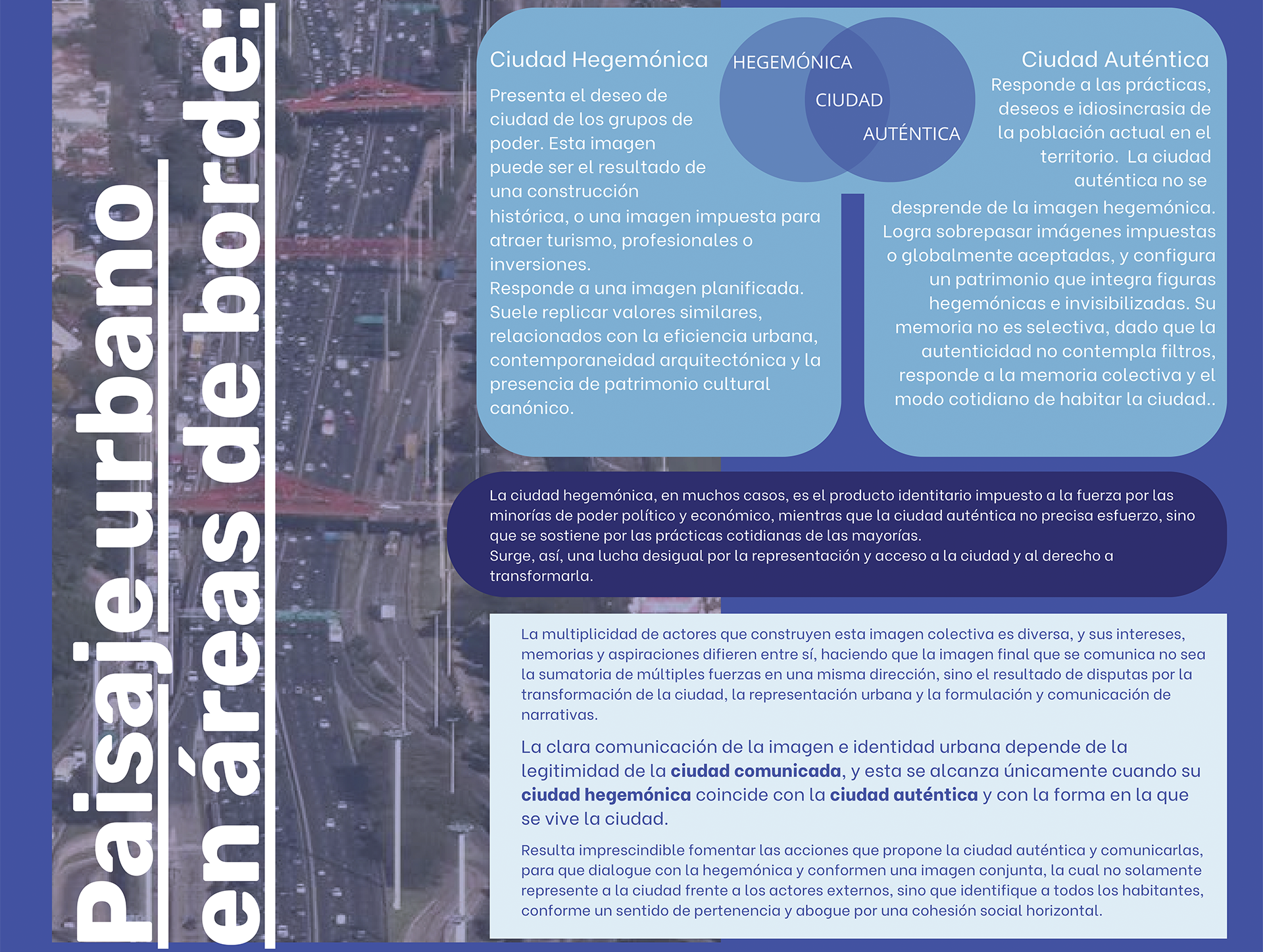
Subjective Perceptions of the Urban Landscape: The (Re)Construction of Individual and Collective Identities in the Northern Edge of the City of Buenos Aires
Groppa, Nicolás; Corbetta, Dolores Josefina; Gerez, Tomas; Herrera, Tamara Zoe; Tella, Guillermo Carlos (2025). "Subjective Perceptions of the Urban Landscape: The (Re)Construction of Individual and Collective Identities in the Northern Edge of the City of Buenos Aires". Actas 2025 SI + Comunicar. XXXIX Jornadas de Investigación y XXI Encuentro Regional, FADU-UBA. ISSN 2796-7905
The article explores the subjective reading of identity symbols in the peripheral urban landscape, the way in which the city communicates them, and the individual perception of these elements by actors. Through this process, users categorize space, generate mental maps, and construct a subjective reality of the urban landscape, which may or may not contribute to the formation of collective identities around public space.
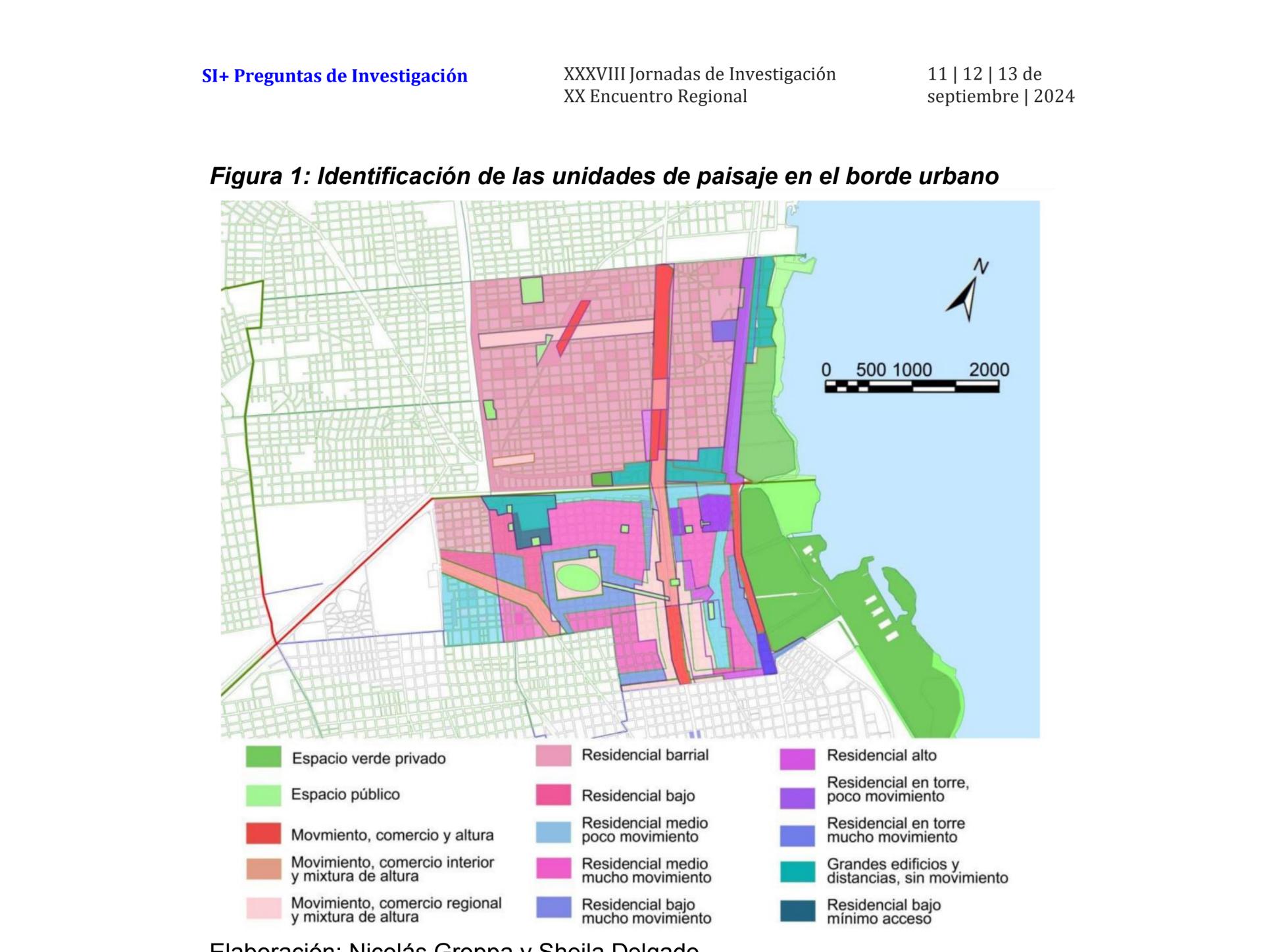
Processes of degradation and (re)generation of the urban border landscape: What identity perceptions are produced in the northern border of the City of Buenos Aires?
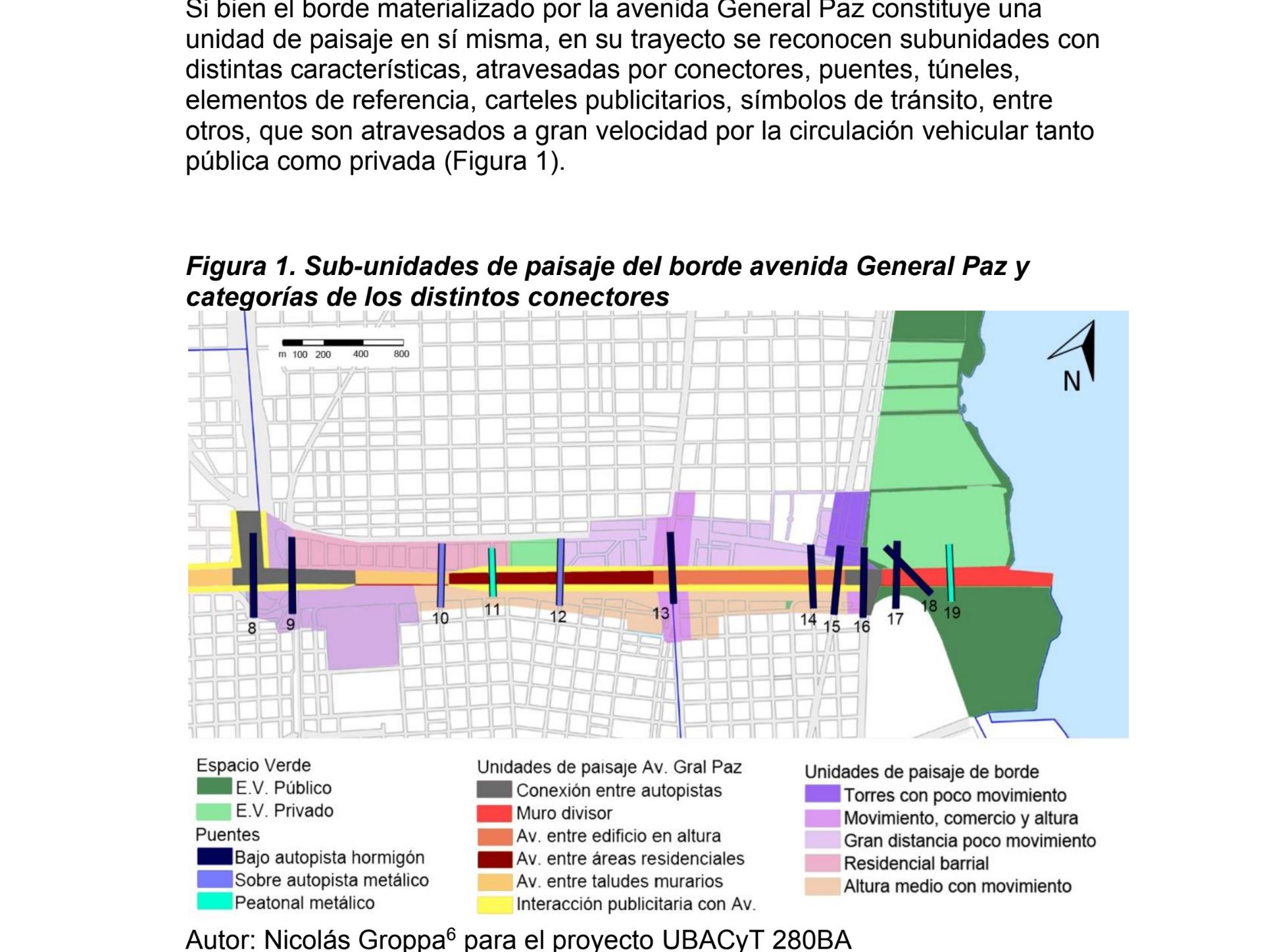
This paper reflects on the research questions that emerged from the UBACyT project Paisaje urbano en áreas de borde. It takes the northern border of the City of Buenos Aires as a case study, identifying landscape units and subunits while considering habitability conditions, user comfort, and environmental characteristics based on data collected on-site. Building on this, the paper raises new questions aimed at expanding knowledge and structuring future research projects.
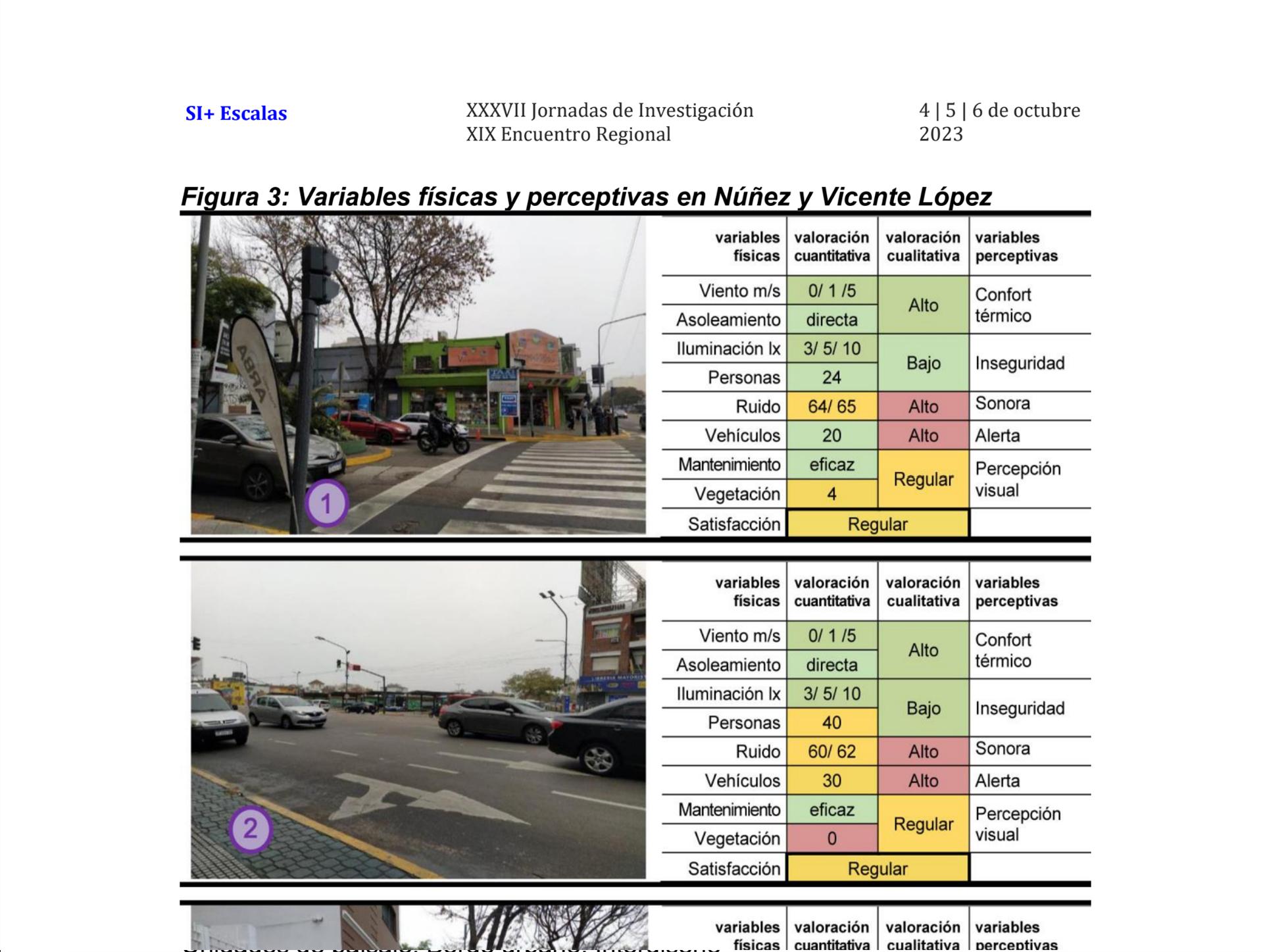
Border nodes and urban landscape: perceptual and habitability scales
The paper explores the physical and phenomenological scales of the northern border of the City of Buenos Aires. The analysis conducted in the area defines scales and schemes aimed at clarifying the influence of the urban border on the right to access the city and the use of public spaces. It validates both qualitatively and quantitatively the users’ perceptions, living conditions, and their experiences at intersections and connections between districts in the area.
An Approximation to the Collective Perspective of the Urban Landscape: The Northern Border of the City of Buenos Aires
This paper analyzes results obtained from the UBACyT project Paisaje urbano en áreas de borde, focusing on two parallel scales: the physical scale, encompassing objective elements such as infrastructure, land, geography, and constructions, and the phenomenological scale, addressing desires, perceptions, and the valuation users attribute to space. The document presents quantitative and qualitative data collected and interpreted, enabling an understanding of the evolution and state of the urban landscape, as well as the impact of urban interventions on the perception of space.
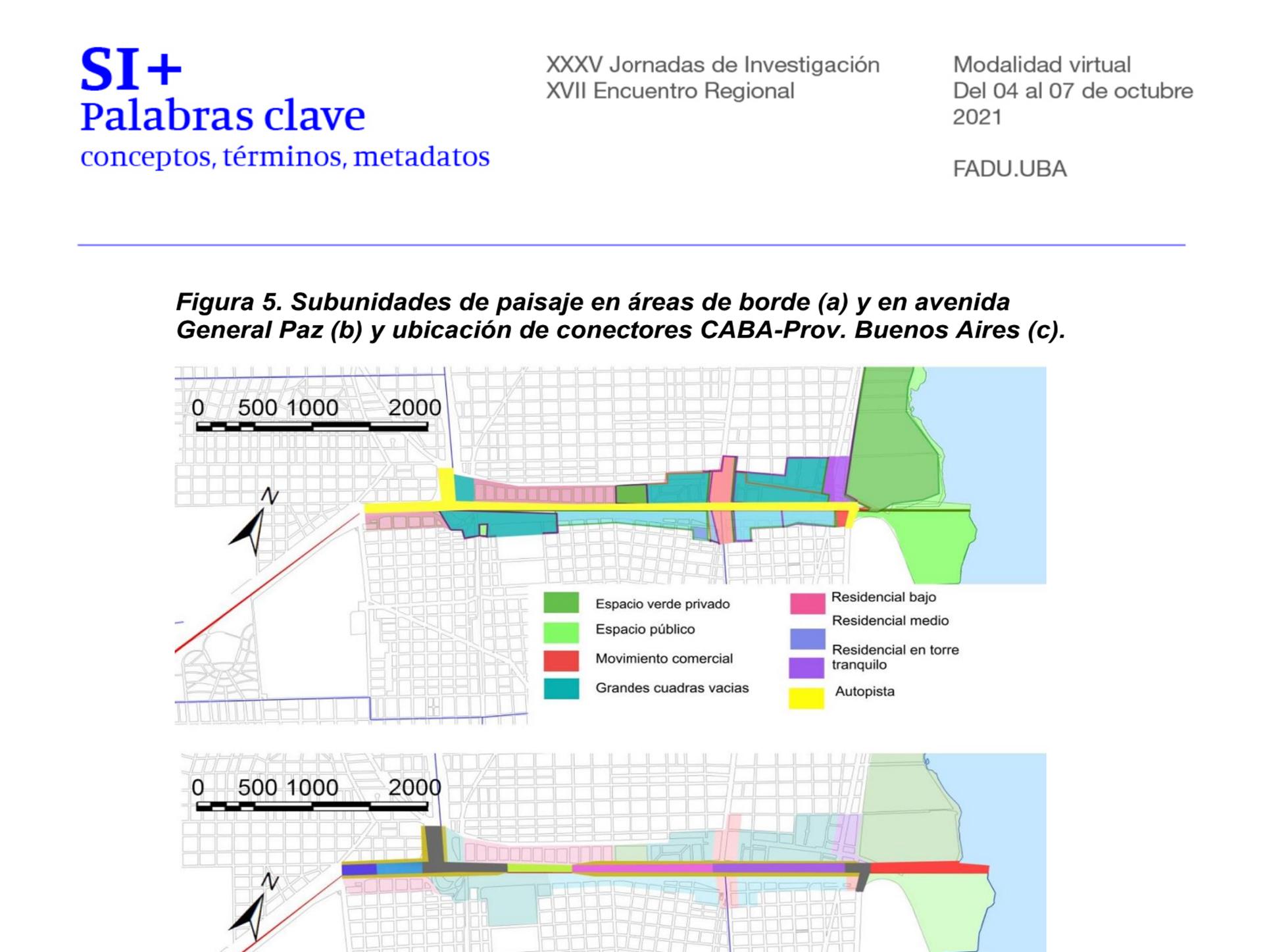
Resignifying the Concepts "Landscape" and "Border" from an Interdesign Perspective
This paper reflects on the keywords of the UBACyT project Paisaje urbano en áreas de borde, which serve as central elements of the investigation. The project framework extends beyond geographical theory, incorporating concepts from anthropology, sociology, urbanism, and architecture, among other disciplines. The definitions developed in this work from a heterogenous background contribute to the theoretical framework shaping the investigation.
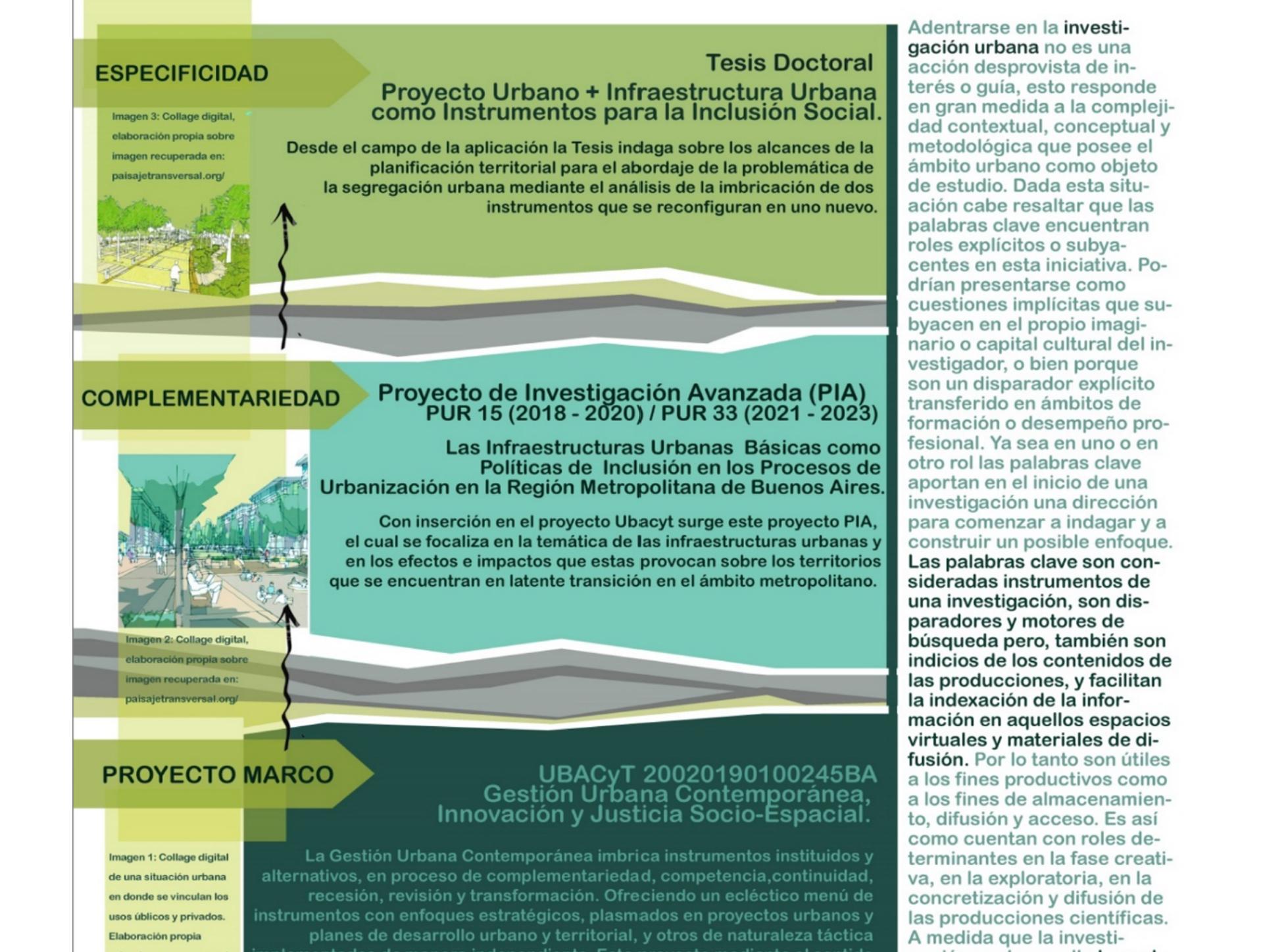
The Underlying and Explicit Roles of Keywords: Structure, Delimitation, and Scope in Urban Research
Keywords are essential tools in research, functioning as triggers, search engines, and indicators of content. They facilitate information indexing in virtual spaces and dissemination materials, serving productive, storage, and access purposes. This paper highlights the roles keywords play in the creative, exploratory, and dissemination phases of research, illustrating how they aid in conceptualizing and categorizing projects across all research scales.
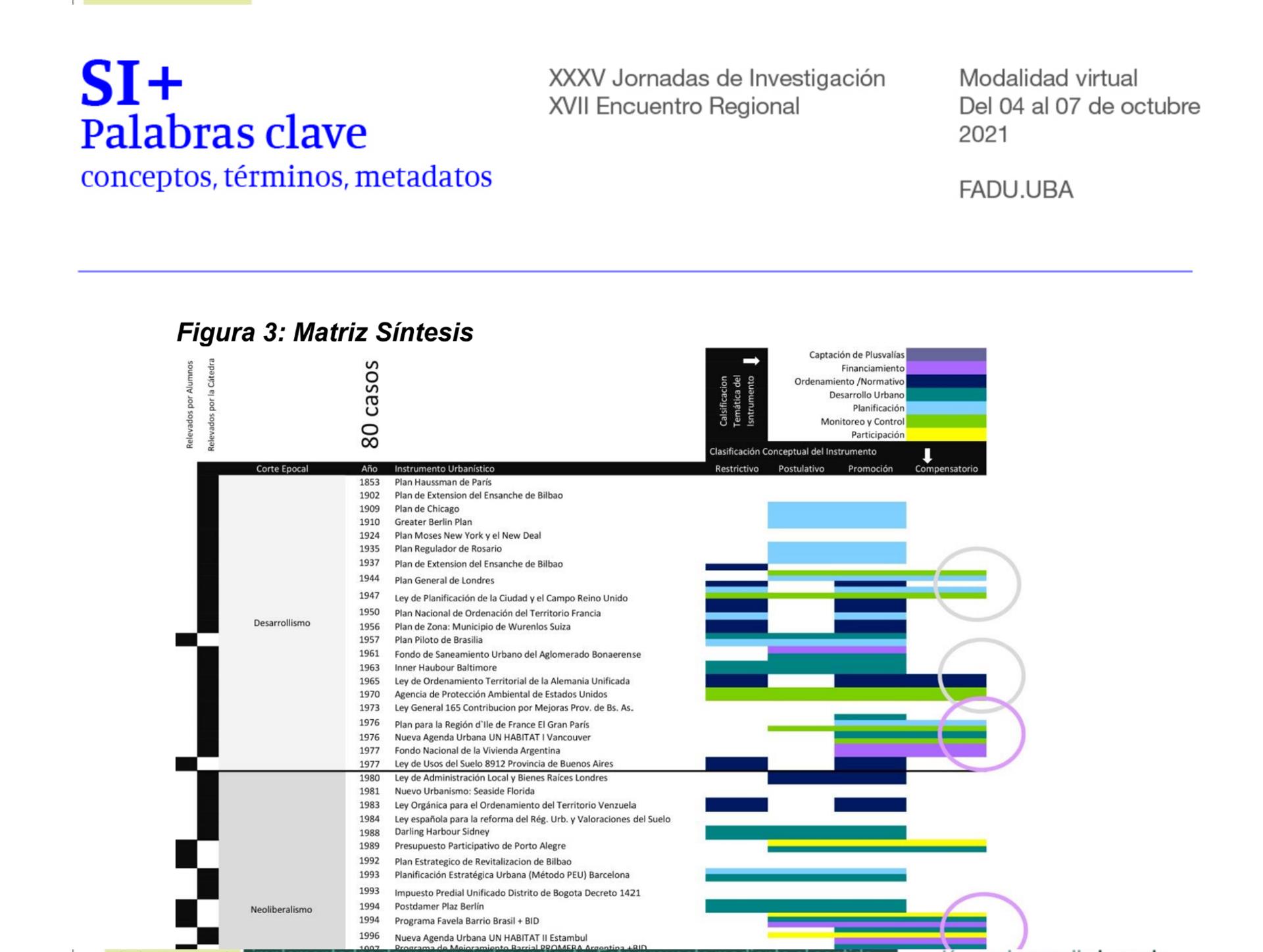
Analysis Matrices as Metadata Generation Devices for Urban Management Research
The empirical analysis phase in urban management research is critical. To address this, it is essential to develop tools for classifying and storing information about studied cases, enabling effective processing and fostering researcher reflection. This paper shares methodologies used to create analysis matrices for urban planning instruments, documenting how these tools capture and reflect urban management practices over time.
Congress and Symposiums
Mapping Urban Borders: A Methodological Approach from an Interdesign Perspective to Landscape Units in Metropolitan Cities. The Case of Buenos Aires and its Agglomeration in Argentina
This paper presents a methodology for mapping and analyzing urban edges by studying landscape units and connections between smaller urban sections. The approach involves analyzing territorial landscape units and conducting ethnographic and semi-structured interviews with local actors. Perceptual maps, inspired by Kevin Lynch’s model but adapted with specific variables, are created to identify and interpret these urban spaces.
Resignifying the concepts "Landscape" and "Border" from an interdesign perspective
Symposiums SI + Palabras claves. XXXV Jornadas de Investigación y XVII Encuentro Regional, FADU-UBA - Research Secretary - Faculty of Architecture, Design and Urbanism - University of Buenos Aires
An Approximation to the Collective Perspective of the Urban Landscape: The Northern Border of the City of Buenos Aires
Symposiums SI + Escalas. XXXVI Jornadas de Investigación y XVIII Encuentro Regional, FADU-UBA - Research Secretary - Faculty of Architecture, Design and Urbanism - University of Buenos Aires
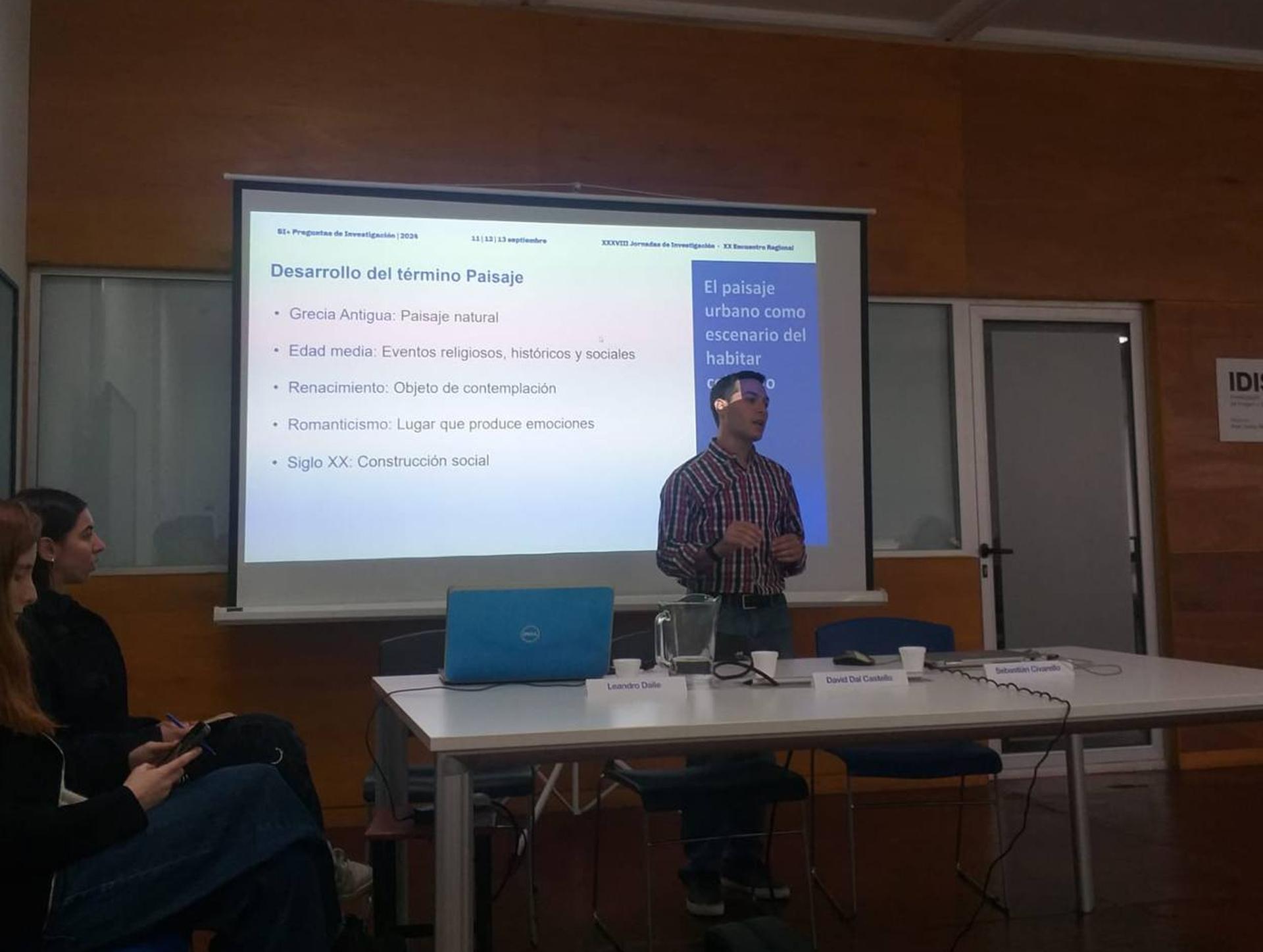
Processes of degradation and (re)generation of the urban border landscape: What identity perceptions are produced in the northern border of the City of Buenos Aires?
Symposiums SI + Preguntas de investigación. XXXVIII Jornadas de Investigación y XX Encuentro Regional, FADU-UBA - Research Secretary - Faculty of Architecture, Design and Urbanism - University of Buenos Aires
Procesos y dinámicas para (re)armar departamentos. Caso Departamento de San Martín
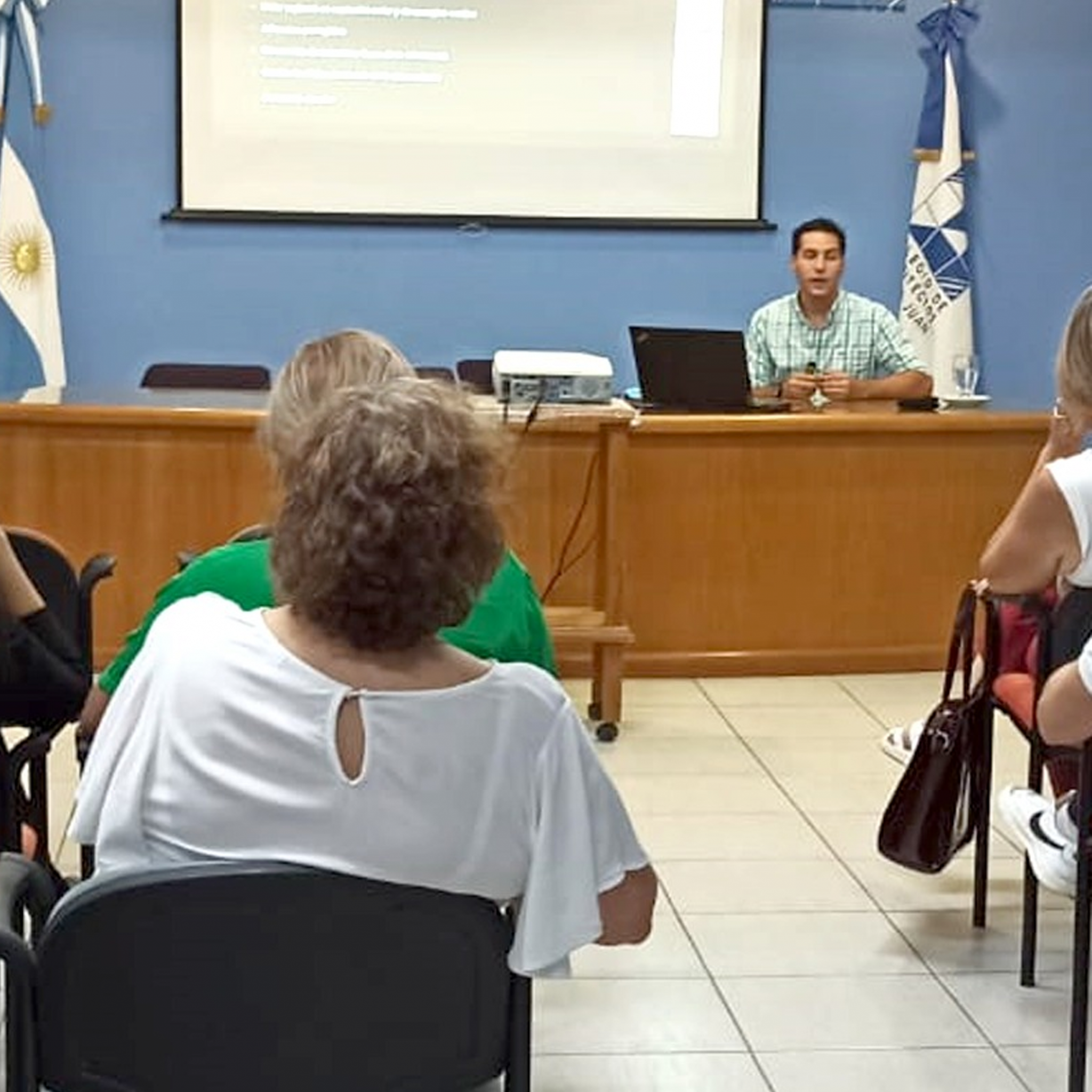
Exposition at San Juan provice's Board of Architects: Procesos y dinámicas para (re)armar departamentos. Caso Departamento de San Martín
Junín Bicentenario
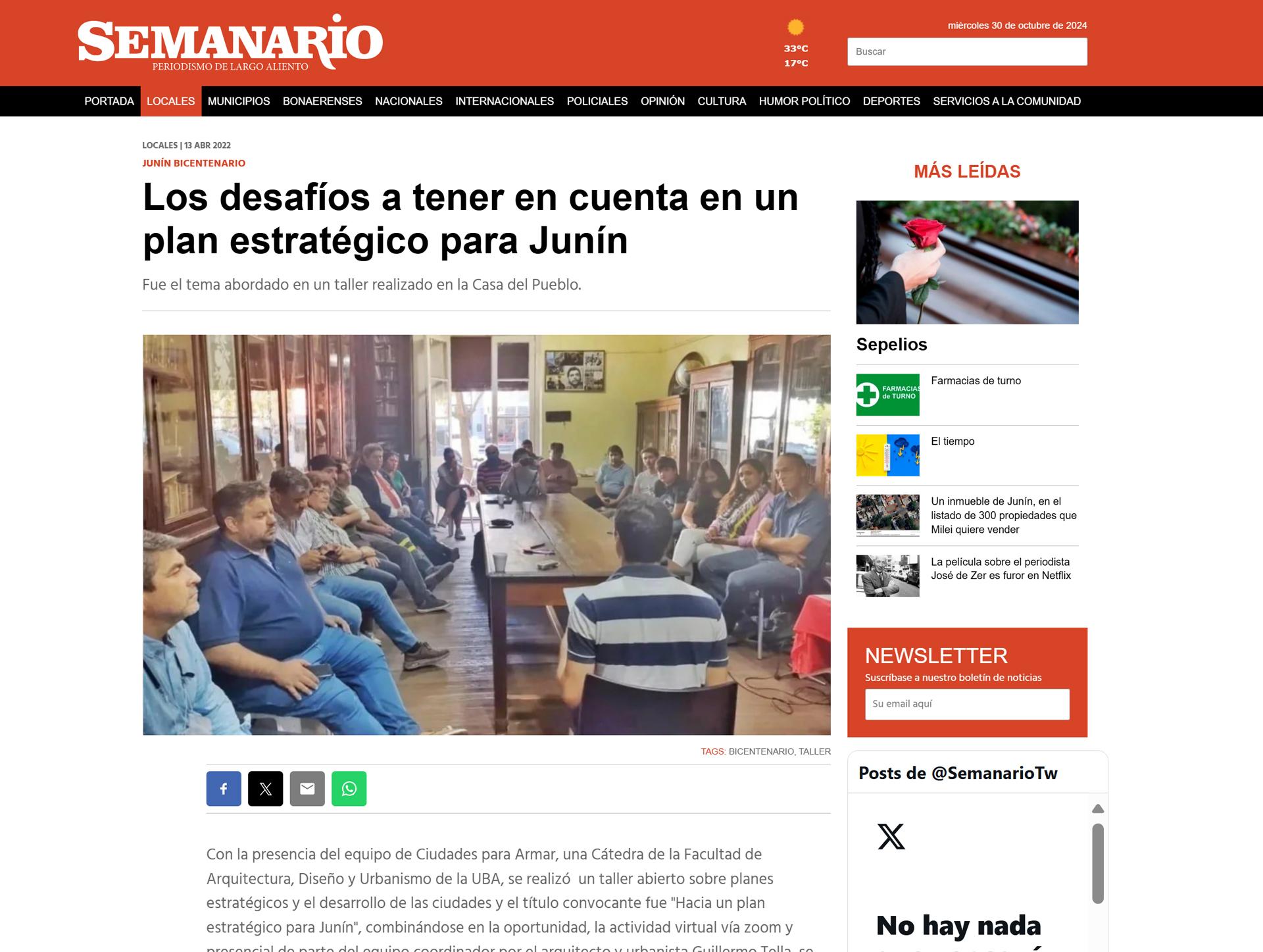
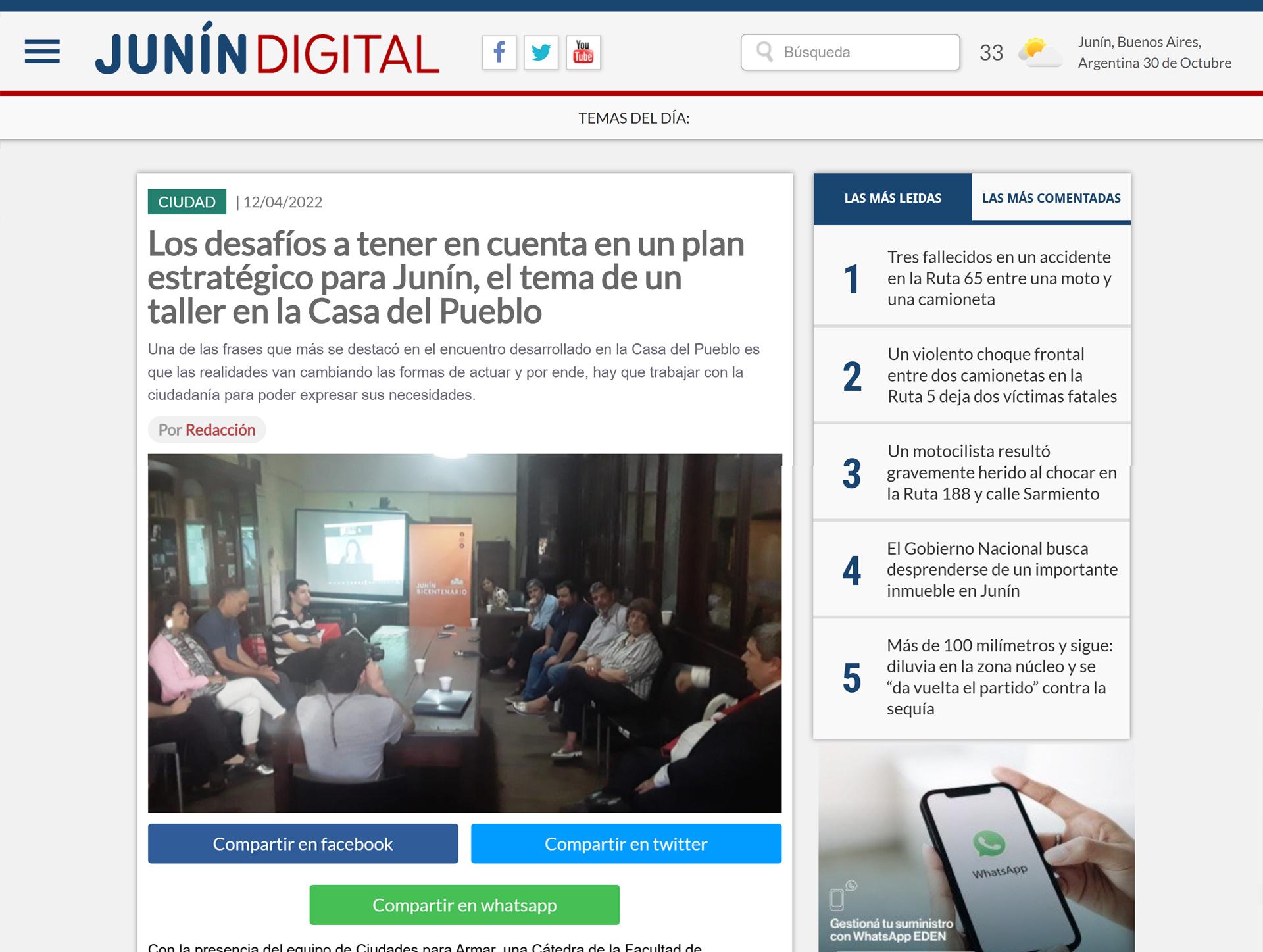
Symposiums Debates del Bicentenario: Herramientas para la participacion ciudadana. 1er encuentro: Hacia un plan estrategico para Junin - Junin Bicentenario - Municipalidad de Junin
Media presence
Debates on the road to the bicentennial - TeleJunin
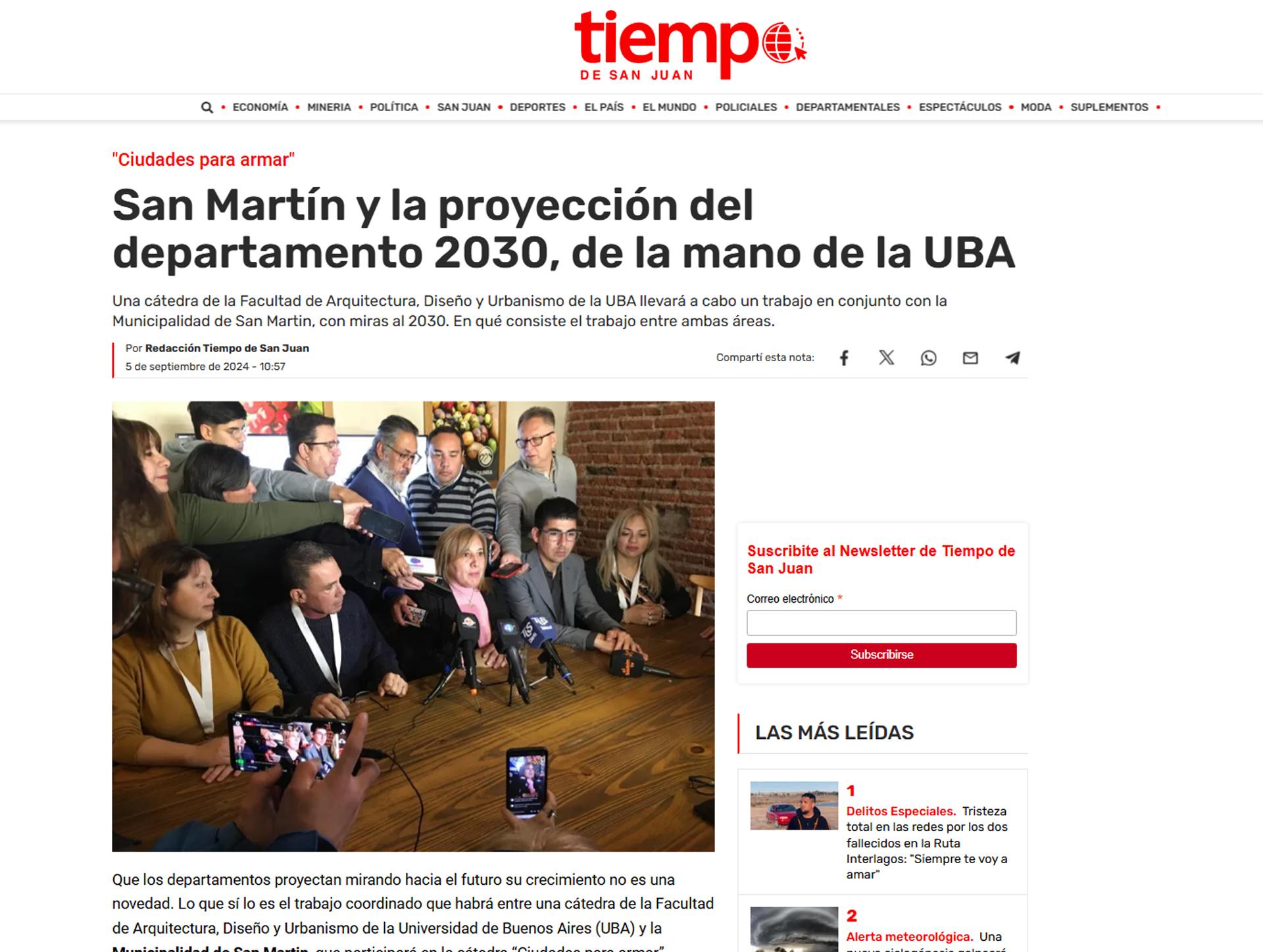
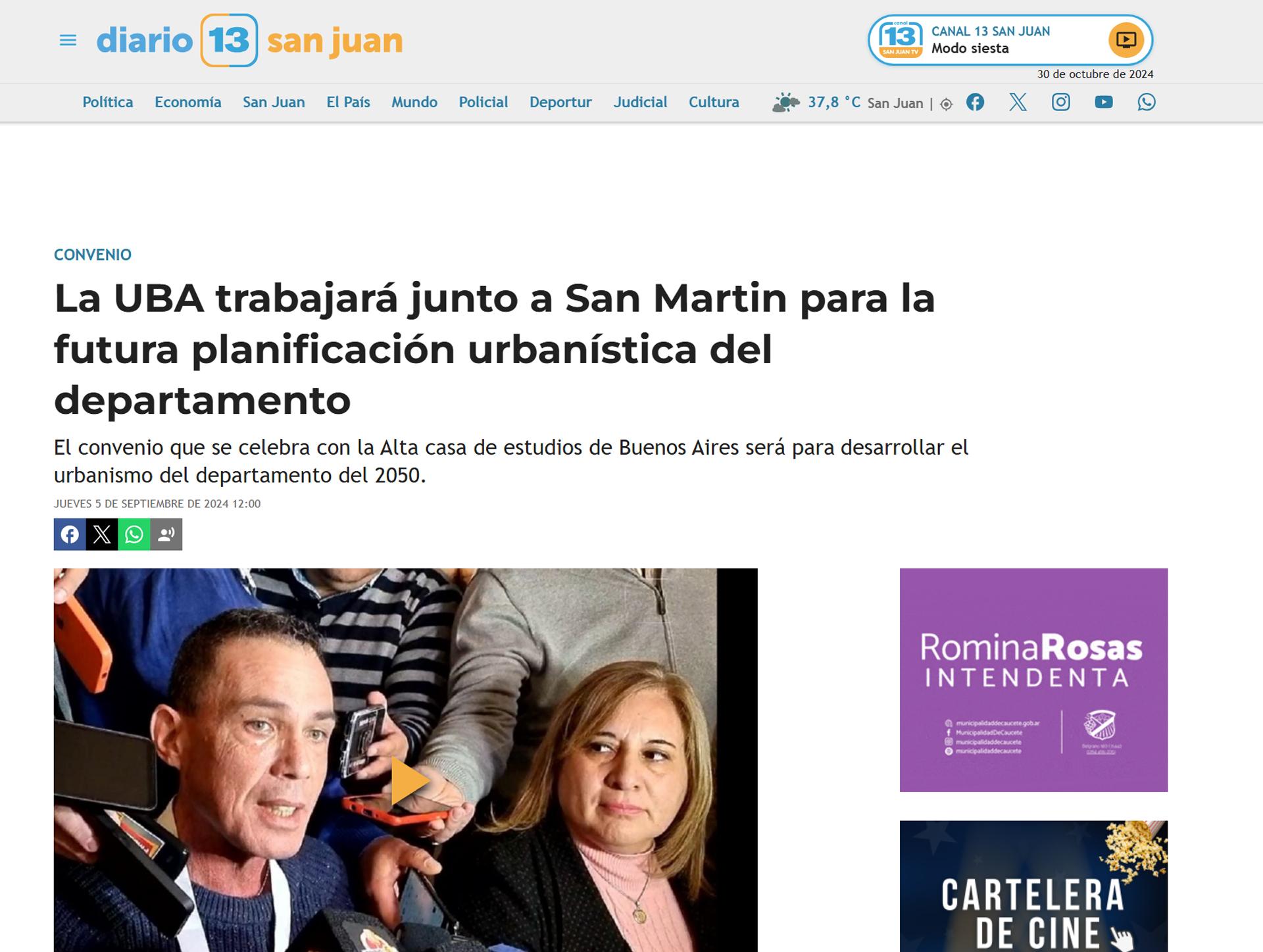
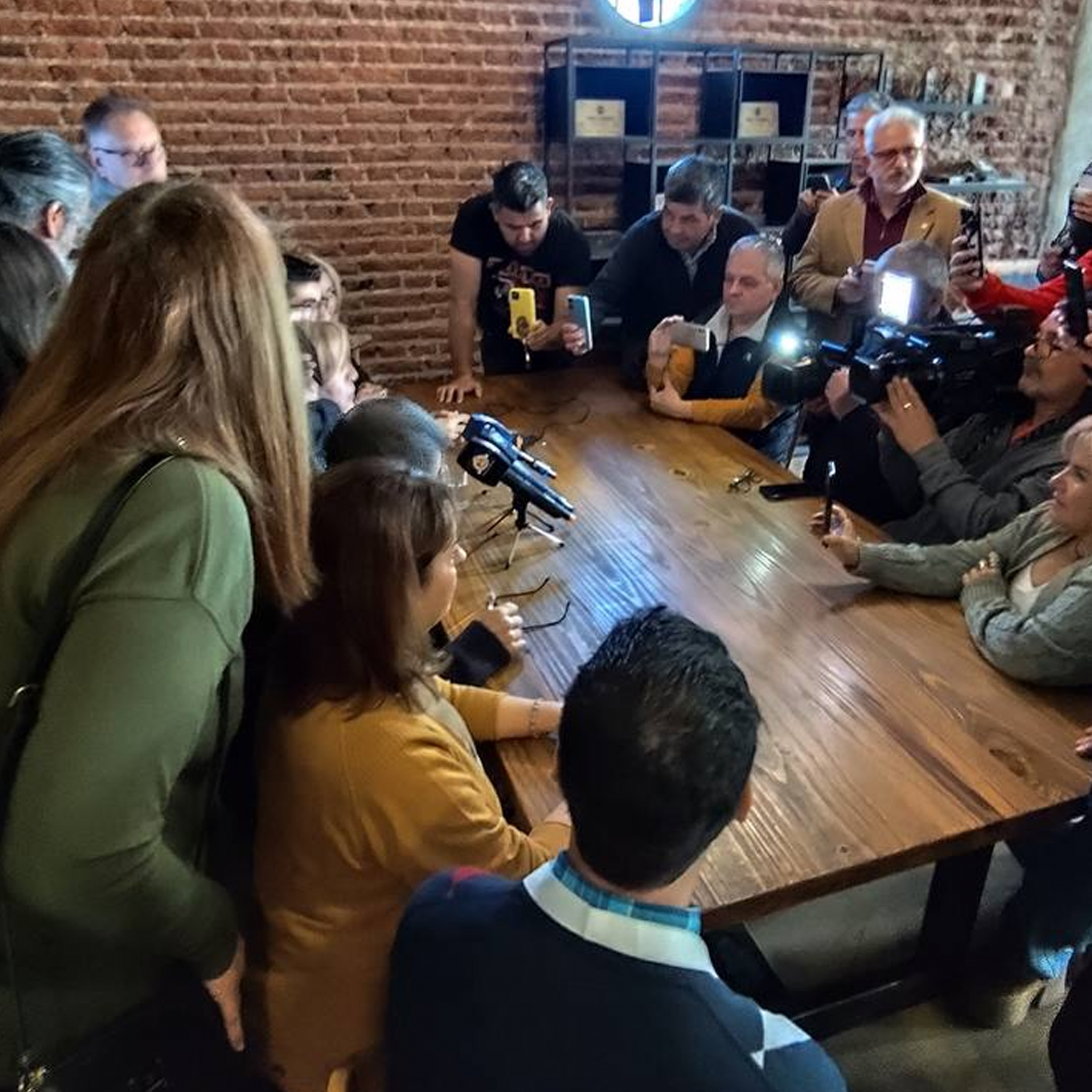
Signing of the Collaboration Agreement between University of Buenos Aires and Municipality of San Martín - Canal 13 San Juan
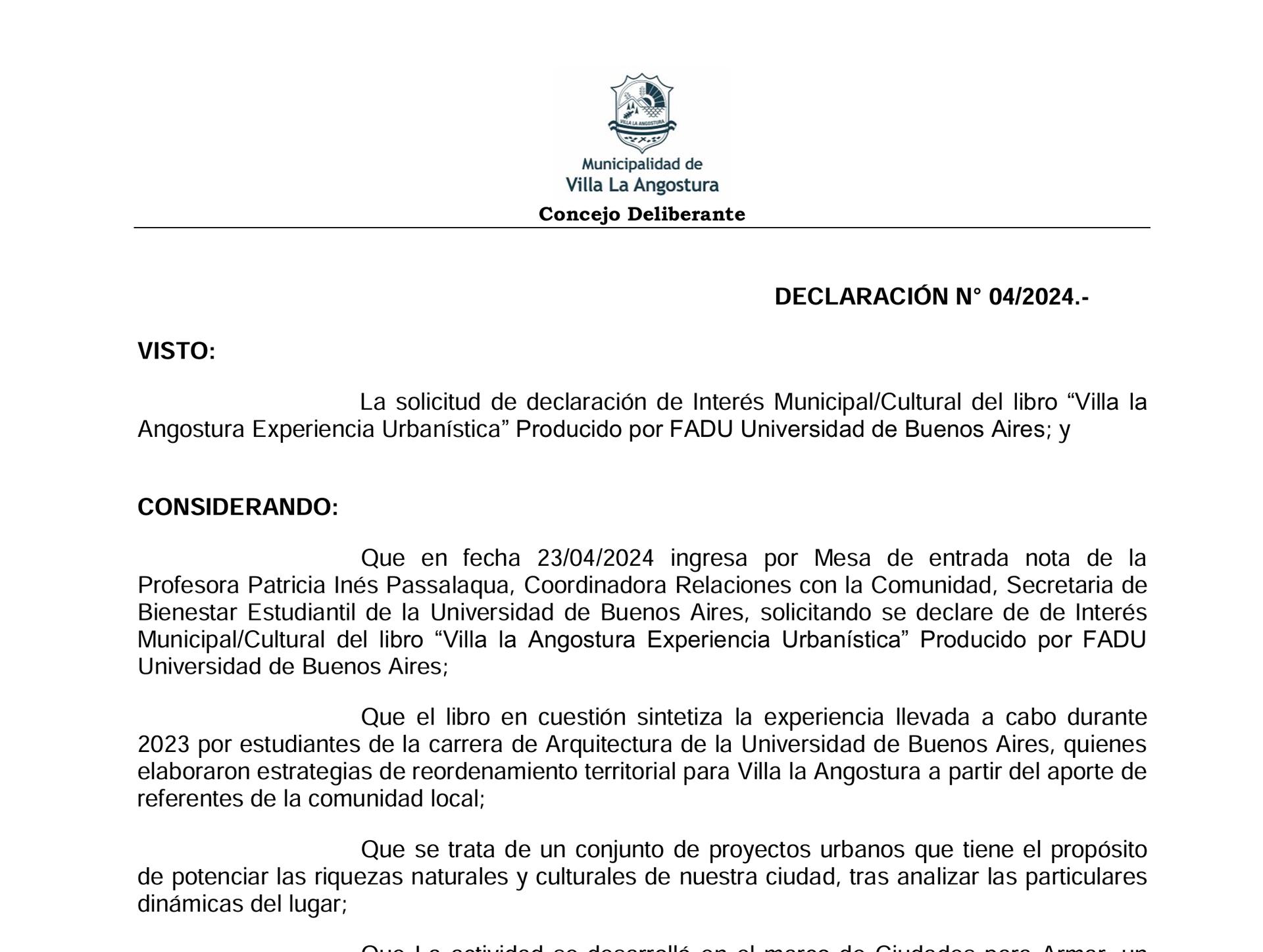
Declaration of Municipal Interest in the book Villa La Angostura: Urban Planning Experiences by Guillermo Tella, Nicolás Groppa, and Mónica Blanco